
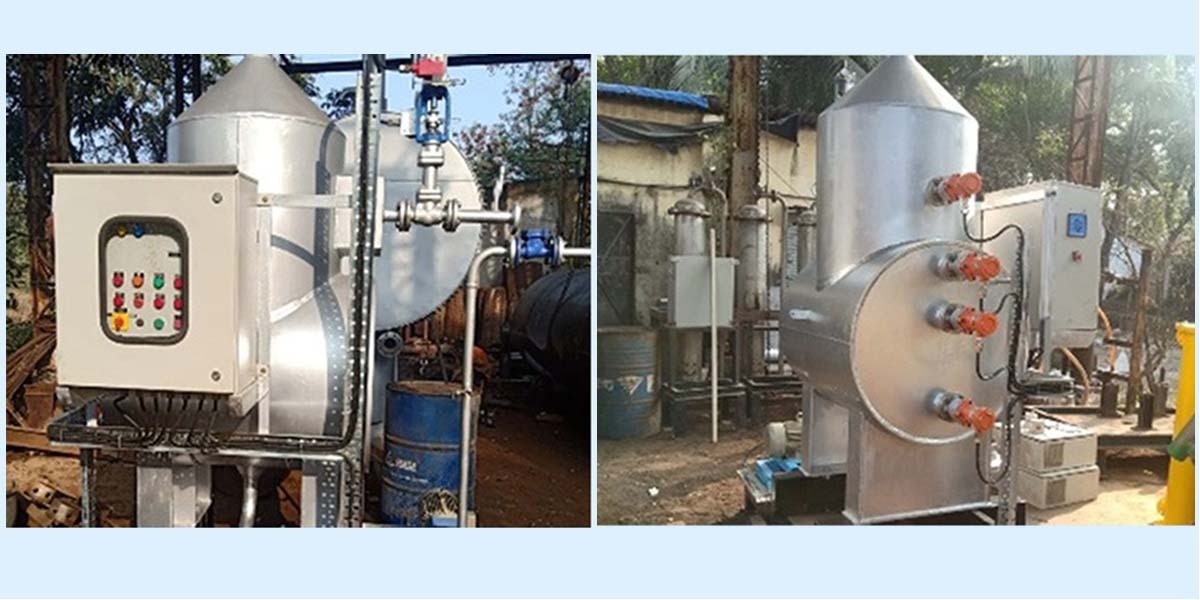
Last month I met one innovative engineer. He had 6 lakh kcal/hr oil fired heater. As oil was
costly, he converted it to the solid fired heater; All by himself. He fabricated a furnace
separately and directed flue gas through the unit -coil.
He was not getting sufficient heat. He thought of burning more fuel to enhance the capacity, so
he increased grate area. He found clinker formation so he changed blower. At last, he came to
us because of frequent coil punctures and frequent oil failure.
Friends, We appreciate innovation as well the quest for saving money. But such approach
doesn’t help. This leads to more wastage due to experiment’s cost, loss of time, money and it is
security hazards – fire hazard too.
A thermic fluid heater is different than a boiler. Here, we are circulating oil. In case of puncture,
it adds fuel to fire. In TF heater, We have controlled heat flux. We also need proper oil velocity
through the heater.
We have to select the heater considering heat flux area, coil configuration, velocity through coil
else we lose substantially. If we increase unnecessary flow, then we consume more power.
Again there is a safety hazard.
Please look into following while selecting the heater:
- Proper heater sizing considering
a. Location, distance from the utility.
b. Transmission losses (In a major textile company, we found transmission losses to be
20% plus of heat generation capacity)
c. Future heat requirements.
d. Consider winter peak load.
e. Regular load. - Fuel – select dual fuel system to reduce dependency on one fuel. Think of area available for
fuel storage, pollution norms, firing system, vertical / horizontal heater orientation etc. We
need to think about cleanliness required in the process and accordingly select location. e.g.
white cloth processing unit may require solid fuel heater far away from the utility. - Compare surface area available for heat absorption.
- Compare grate bar area for fuel burning.
- Ask for specifications of accessories used such as expansion tank, ID fan / Blower etc.
- Compare following while selecting:
a. System efficiency.
b. Total power consumption.
c. Fuel consumption.
d. Fuel availability.
e. Surface area (Higher area will increase surface losses)
f. Manpower requirement.
g. Scope of supply. - Choose Heater manufacturer who understands film (Skin) temperature, heat flux, Coil
velocities etc.
Plan everything on board first, then implement.
Please take care while selecting heater to:
a. Get higher oil life.
b. Prevent loss of oil.
c. Manpower cost.
d. Avoid forced shutdown.
e. And enjoy the fruits of expansion – troublefree.